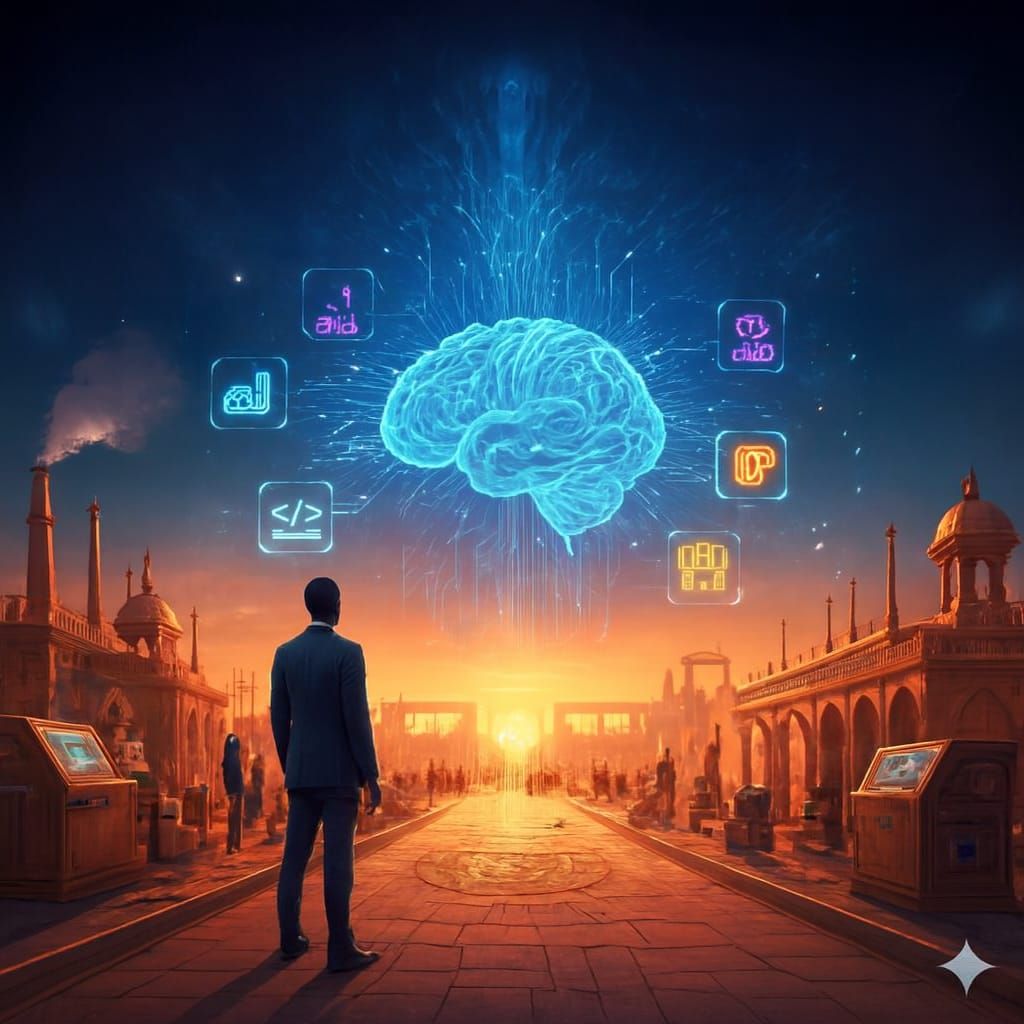
The “future of work” is no longer a distant concept discussed in Silicon Valley boardrooms; it is happening right now in our offices, home studios, and factories. As we move through 2025, Artificial Intelligence (AI) has transitioned from a novel tool to a fundamental teammate. But what does this actually mean for the average professional?
From Automation to Augmentation
The initial fear surrounding AI was often centered on total job replacement. However, the reality of 2025 is more nuanced: AI is not replacing humans; it is replacing tasks. Specifically, it is absorbing the “drudgery”—the repetitive data entry, scheduling nightmares, and basic information retrieval.
By automating these routine processes, AI is acting as a force multiplier for human productivity. Employees are finding themselves “augmented,” able to process vast amounts of data in seconds or generate initial drafts of complex reports with a single prompt. This shift is freeing up the most valuable human resource: cognitive bandwidth.
The Rise of “Human” Skills
Paradoxically, the more advanced our technology becomes, the more valuable our “soft” skills become. In a world where an AI can write code or analyze a balance sheet, the competitive edge shifts to:
- Emotional Intelligence: Managing complex team dynamics and empathy-led leadership.
- Critical Thinking: Verifying AI outputs and making ethical judgments.
- Strategic Innovation: Asking the “why” and “what if” questions that lead to new markets.
According to recent 2025 reports, while AI could displace approximately 9 million jobs globally by 2030, it is projected to create over 19 million new roles. These new vocations—like AI workflow architects and ethical compliance officers—didn’t exist five years ago.
The New Office Dynamics: “Agents” as Colleagues
We are entering the era of the AI Agent. Unlike simple chatbots, these agents can execute multi-step workflows autonomously. Imagine an agent that doesn’t just remind you of a meeting but prepares a briefing document, summarizes previous interactions with the participants, and suggests an agenda based on your goals.
This requires a cultural shift. The workplace of the future is “human-led and agent-powered.” Success will depend on technological literacy—the ability to guide, oversee, and collaborate with these digital entities.
Looking Ahead
The transition won’t be without friction. The “expertise gap” is real, and the need for continuous reskilling is the new mandate for every professional. However, the reward is a workplace that is more creative, less repetitive, and more focused on solving the world’s truly complex problems.
The future of work isn’t about AI taking over; it’s about humans finally having the tools to focus on work that actually matters.
 The Simple Business Man
Leave a comment